

.png)


.png)
.png)
.png)

.png)


.png)

.png)


.png)
In automotive, new energy vehicles, robotics, electronics, power tools, and industrial equipment, lightweighting has become an increasingly important consideration in component design. As engineers look beyond traditional steel and aluminum solutions, magnesium alloy is gaining attention as an engineering material that combines low density, high specific strength, excellent damping performance, and good potential for structural integration.
1. Why Magnesium Alloy Is Gaining Attention
Magnesium has a density of approximately 1.74 g/cm³, significantly lower than aluminum alloys and steel. For components where weight reduction is a key design objective, magnesium alloy can provide an opportunity to reduce component weight while maintaining the required structural performance.
Lightweighting is particularly important in automotive and new energy vehicle applications. Reducing component weight can contribute to lower overall vehicle mass and improved energy efficiency.
However, based on our manufacturing experience, we believe that:
Magnesium alloy is not simply a lighter alternative to aluminum.
Its real value comes from the combination of low density, high specific strength, excellent damping performance, and the ability to produce complex integrated structures. These characteristics make magnesium alloy particularly attractive for components where weight, structure, and functional performance must be considered together.
2. Lightweighting Beyond Aluminum
Aluminum alloys are already widely used in automotive, industrial, and electronic applications. However, when product designers pursue further weight reduction, several additional questions need to be considered:
- Can the component be made lighter?
- Can multiple parts be integrated into one component?
- Can wall thickness be optimized?
- Can vibration be reduced?
- Can assembly steps be eliminated?
Magnesium alloy provides advantages in several of these areas.
For example, a structure originally consisting of multiple brackets, connectors, and fasteners may, after redesign, be manufactured as a single magnesium high pressure die casting. This approach can reduce material weight while also reducing the number of components, assembly operations, and associated manufacturing complexity.
3. Excellent Damping Performance
Another important but sometimes overlooked advantage of magnesium alloy is its good damping capacity.
For automotive systems, motors, electronic equipment, and certain precision industrial applications, controlling vibration and noise can be just as important as achieving sufficient mechanical strength.
Magnesium alloy can therefore be considered for applications such as:
- Automotive structural components
- Instrument panel components
- Motor housings
- Electronic equipment housings
- Brackets and support structures
- Power tool components
- Robot and automation components
Material selection should not be based solely on whether the material provides sufficient strength. Weight, stiffness, vibration, structural integration, and manufacturing method should also be considered as part of the overall engineering solution.
4. Why High Pressure Die Casting Is Suitable for Magnesium Components
Magnesium alloys have good characteristics for high pressure die casting, making them suitable for producing components with complex geometries and integrated features.
With appropriate die design, magnesium high pressure die casting can be used to form:
- Thin-wall structures
- Complex ribs
- Deep cavities
- Curved structures
- Integrated mounting features
- Complex three-dimensional geometries
This is one of the key advantages of magnesium die casting.
As a manufacturer of custom components based on customer drawings, we understand that a magnesium component is often more than a simple geometric shape. Customer designs may include specific wall thickness requirements, reinforcing ribs, mounting holes, sealing surfaces, machining datums, and assembly requirements.
Therefore, the relationship between part design and die casting technology is critical to project success.
5. Our Experience: Magnesium Die Casting Starts Before the Machine
Based on our production experience, the quality of a magnesium die casting is not determined only when the die casting machine starts running.
Before mass production, we analyze the customer's drawings and 3D models and evaluate the manufacturability of the component.
Our typical development process includes:
DFM, or Design for Manufacturing, is particularly important for complex magnesium components. During the engineering stage, we pay close attention to:
- Wall thickness
- Rib design
- Draft angles
- Fillet design
- Metal flow
- Gate location
- Overflow design
- Venting
- Ejection structure
- Machining allowance
- Critical dimensions
For complex magnesium components, insufficient consideration of metal flow and die structure during the early engineering stage may lead to filling problems, porosity, shrinkage, deformation, or dimensional variation during production.
Our approach is to identify and solve potential manufacturing problems as early as possible, rather than waiting until mass production to address them.
6. Process Control Is Critical
Magnesium high pressure die casting requires stable and well-controlled production conditions. During manufacturing, important parameters may include molten metal temperature, die temperature, injection conditions, injection speed, pressure, holding pressure, and cooling conditions.
For thin-wall, complex, and high-precision components, even relatively small variations in process parameters can affect the final product quality.
Stable process parameters are the foundation of stable component quality.
For mass production projects, we use standardized operating procedures, process monitoring, quality records, and inspection controls to reduce process variation and minimize the influence of human factors.
7. Porosity and Internal Quality
For magnesium die castings, internal quality is also an important consideration. A component that appears acceptable on the outside does not necessarily mean that its internal structure fully meets the required specifications.
For components subjected to mechanical loads, vibration, or long-term cyclic operation, internal defects such as porosity and shrinkage may affect:
- Mechanical strength
- Fatigue performance
- Sealing performance
- Machining quality
- Long-term reliability
For projects with specific internal quality requirements, we develop inspection procedures according to the customer's specifications and application requirements.
Where applicable, non-destructive testing such as X-ray inspection can be used to verify internal casting quality and identify potential internal defects that cannot be detected through conventional visual inspection.
8. Magnesium Die Casting + CNC Machining
For many industrial customers, the actual requirement is not simply a raw die casting. What they need is a finished component that can be delivered to their assembly line or integrated directly into their production process.
We therefore combine magnesium die casting with CNC machining and other downstream processes to provide an integrated manufacturing solution.
A typical production route may include:
Die casting creates the complex basic structure, while CNC machining provides the dimensional accuracy required for critical features such as mounting holes, sealing surfaces, machining datums, and other functional areas.
This integrated manufacturing approach can reduce the need for customers to coordinate multiple suppliers and can also help improve production consistency and project management efficiency.
9. Surface Treatment and Corrosion Protection
Although magnesium alloy offers significant lightweighting advantages, corrosion protection requires careful consideration, particularly compared with some aluminum alloy applications.
Material selection, component design, operating environment, and surface treatment should therefore be evaluated together.
Depending on the application and customer requirements, appropriate surface treatment and corrosion protection systems can be incorporated into the manufacturing process.
For industrial components supplied to European and North American customers, we pay particular attention to the relationship between:
The final performance of a component depends not only on the material itself, but also on how the component is designed, treated, manufactured, and used in its actual operating environment.
10. Quality Control for Magnesium Components
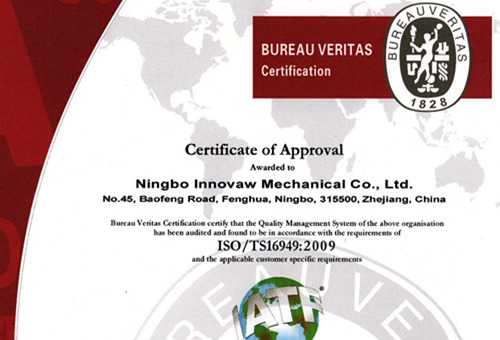
As an OEM component manufacturer serving customers in Europe and North America, we organize production according to structured automotive-industry quality management practices. Our quality control covers the complete process from product development through mass production.
Our quality management and process control tools include:
- APQP
- PFMEA
- Control Plan
- SPC
- MSA
- PPAP
- Process Inspection
- Final Inspection
During new product development, we identify potential manufacturing and quality risks at an early stage and translate critical quality characteristics into production controls and inspection requirements.
Build quality into the process.
Instead of relying solely on final inspection, we focus on engineering analysis, process control, and continuous monitoring to build product quality into the manufacturing process.
11. Where Magnesium Die Casting Makes Sense
Magnesium alloy is not the best material for every component. Material selection should always be based on the component's functional requirements, operating environment, structural design, production volume, and cost considerations.
Magnesium die casting can be particularly attractive for applications where lightweighting, structural integration, vibration control, and complex geometry are important.
Automotive & New Energy Vehicles
Magnesium components can be considered for lightweight structural components, brackets, housings, and other parts where weight reduction and vibration control are important.
Electronics & Electrical Equipment
Magnesium alloy can be used for selected equipment housings and structural components where low weight, rigidity, dimensional stability, and structural integration are important.
Robotics & Automation
Magnesium alloy can be considered for robot structures, brackets, and moving components where reducing component weight can help reduce the load on the motion system.
Power Tools
Magnesium die casting can provide a useful combination of low weight, rigidity, and durability for selected power tool structures and housings.
Industrial Equipment
Magnesium alloy can also be considered for industrial components where lightweight structures, complex geometries, and vibration damping are important design requirements.
12. Choosing Magnesium Is an Engineering Decision
In our experience, adopting magnesium alloy is not simply a matter of replacing an aluminum component with a magnesium alloy component.
A successful magnesium die casting project requires the entire manufacturing chain to work together:
Only when these stages are properly matched can the full potential of magnesium alloy be realized.
Therefore, when a customer provides us with a magnesium component drawing, our question is not simply:
"Can we cast it?"
We focus on the larger engineering question:
"How can we manufacture it consistently, efficiently, and reliably?"
This is the value we aim to provide as a magnesium high pressure die casting manufacturer.
From Magnesium Alloy to Finished Component
Magnesium alloy is becoming an increasingly important material for lightweight component manufacturing.
Its value goes beyond its low density. The combination of lightweighting, high specific strength, damping performance, and complex structural integration makes magnesium alloy an attractive option for selected modern engineering applications.
For European and North American customers, the real value is not simply purchasing a magnesium die casting. It is working with a manufacturing partner that understands product design, material behavior, manufacturing requirements, quality standards, and the complete path from drawing to finished component.
Based on customer 2D drawings, 3D models, or product requirements, we can support DFM analysis, mold development, magnesium high pressure die casting, CNC machining, surface treatment, and final quality inspection.
Our goal is to provide customized magnesium alloy components for customers in automotive, industrial equipment, electronics, power tools, robotics, and other demanding applications.
Lightweight materials.
Complex structures.
Reliable manufacturing.
This is the value that magnesium high pressure die casting can bring to modern component manufacturing.




.png)